- Home
- |
- About Us
- |
- |
- |
- Patents
- |
- Calendars
- |
- |
- Contact Us
-
×
Understanding 70 CRI vs 82 CRI vs 97 CRI Lighting
CRI (Colour Rendering Index) measures how accurately a light source reveals true colours compared to natural daylight. Higher CRI lighting improves product appearance, inspection accuracy, visual comfort, and perceived quality.
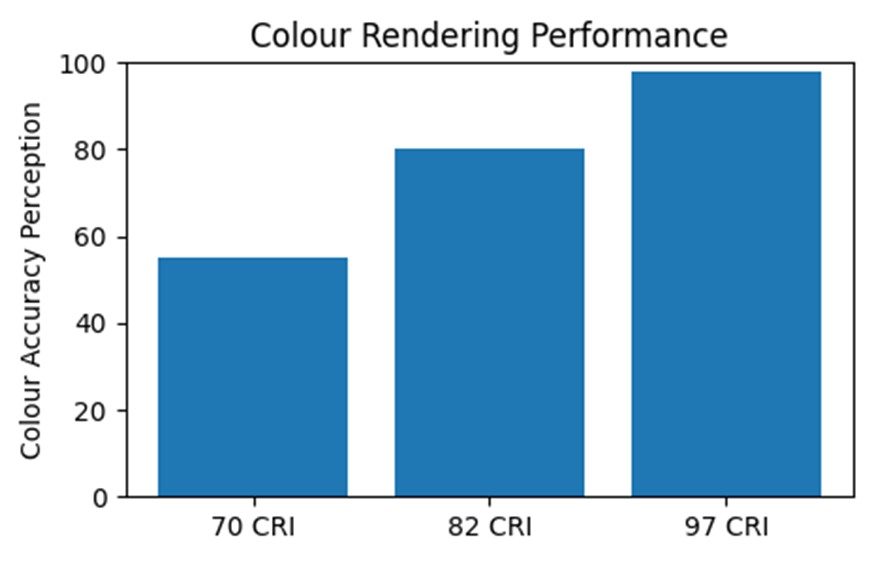
Higher CRI lighting delivers significantly better colour accuracy and visual quality.
| CRI Level | Advantages | Disadvantages | Typical Applications |
| 70 CRI | Lower cost and slightly higher efficiency. | Colours appear dull or inaccurate. | Warehouses, outdoor areas, utility spaces. |
| 82 CRI | Good balance of efficiency and visual comfort. | Moderate colour accuracy. | Factories, offices, industrial production. |
| 97 CRI | Excellent colour accuracy and premium appearance. | Higher initial cost and slightly lower lm/W. | Inspection zones, food industry, textiles, healthcare, premium retail. |
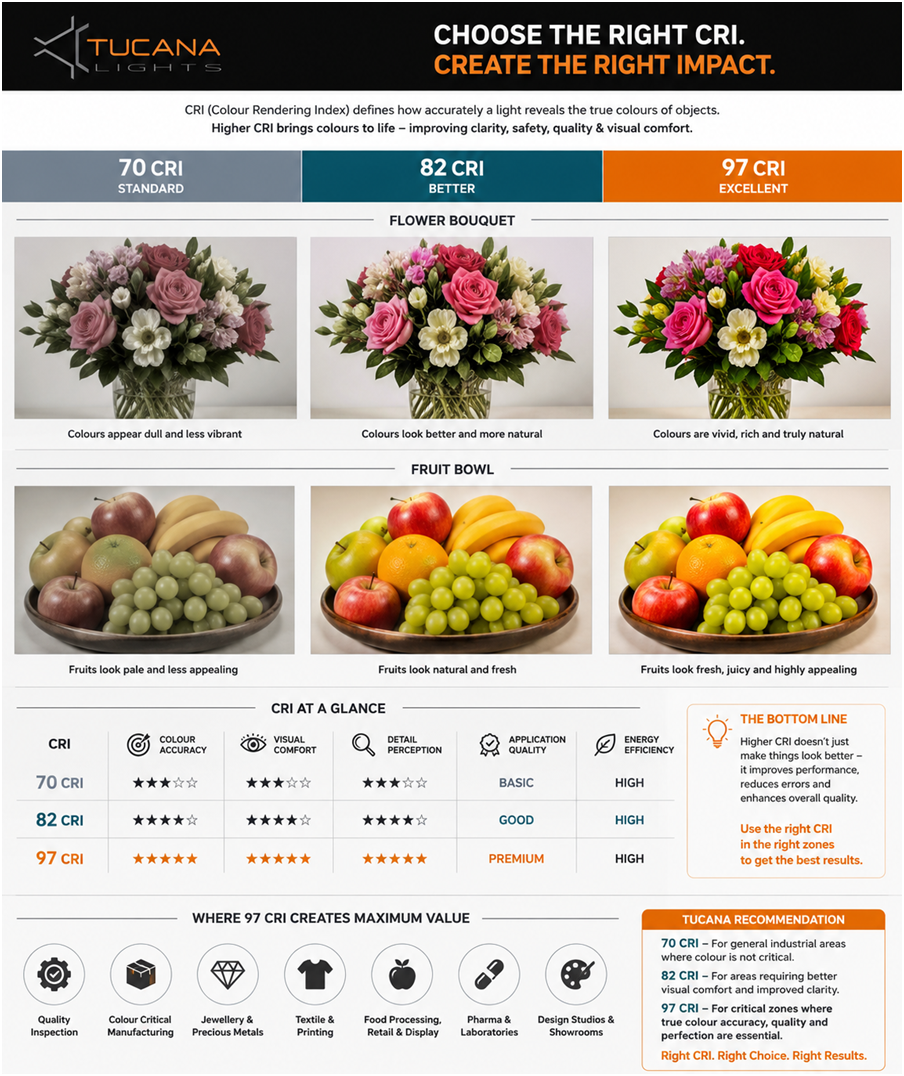
Why 97 CRI Creates Higher Value
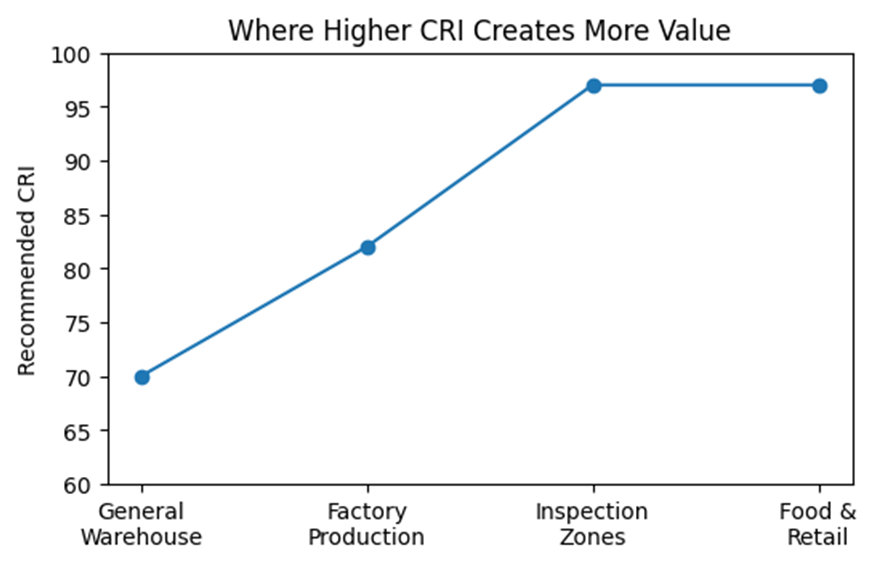
Not every area needs 97 CRI lighting. However, in zones where colour judgment, product appearance, inspection quality, or customer perception matter, high CRI lighting can significantly improve outcomes.
Higher CRI lighting should be selectively used in high-value visual zones.
Tucana Recommendation
Use 82+ CRI lighting for general industrial applications and selectively deploy 97 CRI lighting in critical visual zones to improve quality perception, inspection accuracy, and customer experience.
No. 2, Shyam Estate, Opposite Shah alloys, Santej, Ahmedabad - 382721
+91 70468 33433
info@tucanalights.com