
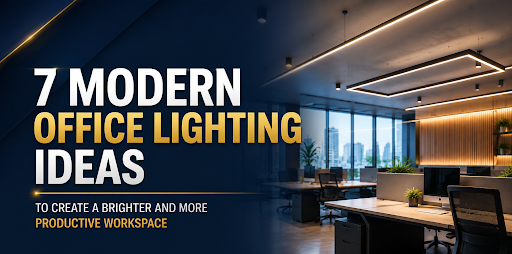
Office design has changed significantly in recent years. Modern workplaces are no longer built only around desks, chairs, and meeting rooms. They are designed to support productivity, collaboration, comfort, employee well-being, and brand experience.
Lighting plays a major role in achieving these goals.
The right office lighting can improve visibility, reduce eye strain, create a more welcoming environment, and support better focus throughout the workday. Poor lighting, on the other hand, can make a workspace feel dull, uncomfortable, and less productive.
Whether you are designing a new office or upgrading an existing workspace, here are seven modern office lighting ideas to create a brighter and more productive environment.
1. Use Layered Lighting for a Balanced Workspace
A modern office should not depend on a single lighting source. Layered lighting combines different types of illumination to create a more balanced and functional environment.
This can include:
General ceiling lighting
Task lighting for workstations
Accent lighting for design elements
Decorative lighting for reception areas
Focused lighting for meeting rooms
Layered lighting helps create depth, improves visibility, and allows different office areas to function more effectively.
2. Choose LED Office Ceiling Lights for Uniform Illumination
Ceiling lighting remains one of the most important elements in office design. Well-planned LED office ceiling lights help provide consistent illumination across workstations, corridors, meeting rooms, and shared spaces.
Modern LED ceiling lights are preferred because they offer:
Energy-efficient performance
Long operational life
Uniform light distribution
Reduced maintenance needs
Clean and professional aesthetics
For offices with long operating hours, LED lighting also helps reduce electricity consumption while maintaining a comfortable working environment.
3. Add Task Lighting for Focused Work Areas
Not every area of an office requires the same lighting intensity. Employees working on detailed tasks, reading, designing, or reviewing documents may need additional focused illumination.
Task lighting is useful for:
Individual desks
Design workstations
Meeting tables
Reception counters
Collaborative work areas
By adding task lighting, businesses can improve visual comfort without over-lighting the entire office.
4. Use Linear Lights for a Modern Office Look
Linear lights are one of the most popular choices in contemporary office interiors. Their clean design and continuous illumination make them ideal for modern workspaces.
They work well in:
Open offices
Conference rooms
Corridors
Reception areas
Coworking spaces
Linear lighting creates a sleek, organized, and professional appearance while delivering balanced illumination across the workspace.
5. Improve Meeting Rooms With Adjustable Lighting
Meeting rooms serve multiple purposes. They may be used for presentations, video calls, discussions, interviews, and training sessions. A single lighting setup may not work well for every activity.
Adjustable lighting can help create the right environment based on usage.
For example:
Brighter lighting for discussions
Softer lighting for presentations
Balanced lighting for video meetings
Focused lighting for conference tables
Flexible lighting improves comfort and helps the room adapt to different business needs.
6. Create Welcoming Reception and Lounge Areas
The reception area is often the first impression visitors have of a business. Lighting should create a welcoming, professional, and visually appealing environment.
For reception and lounge spaces, consider:
Warm and comfortable lighting
Accent lights for walls or brand elements
Pendant lights for visual appeal
Ceiling lights for general illumination
Decorative fixtures that match the interior theme
Well-designed lighting can make these spaces feel more inviting and aligned with the company’s brand identity.
7. Prioritize Visual Comfort and Employee Well-Being
Office lighting should support people, not just illuminate interiors. Brightness, glare, color temperature, and light distribution all influence how employees feel and perform throughout the day.
Good office lighting should:
Reduce glare
Minimize eye strain
Support concentration
Create comfortable brightness levels
Avoid harsh shadows
Maintain consistent illumination
A workspace designed around visual comfort can help employees stay focused, comfortable, and productive for longer periods.
Common Office Lighting Mistakes to Avoid
Even modern offices can suffer from poor lighting decisions. Some common mistakes include:
Using lighting that is too harsh or too dim
Ignoring glare on screens and workstations
Using the same lighting approach for every area
Overlooking meeting room requirements
Choosing fixtures only for appearance
Underestimating maintenance and energy costs
A successful office lighting plan should balance function, comfort, efficiency, and design.
How to Choose the Right Office Lighting
Before selecting office lighting, consider:
How each area of the office is used
Number of working hours per day
Natural light availability
Employee comfort requirements
Interior design style
Energy efficiency goals
Maintenance expectations
Future layout changes
These factors help create a lighting strategy that supports both current needs and long-term business growth.
Conclusion
Modern office lighting is about more than brightness. It influences productivity, comfort, visual appeal, energy efficiency, and the overall workplace experience.
From LED office ceiling lights and linear lighting to task lighting, reception lighting, and adjustable meeting room solutions, each lighting choice plays a role in creating a better workspace.
At Tucana Lights, we believe lighting should enhance how people work, interact, and experience a space. Our research and design-driven lighting solutions are developed to support modern offices with reliable performance, energy efficiency, visual comfort, and long-term value.
A brighter office is not just a better-looking office—it is a more productive, comfortable, and future-ready workspace.