
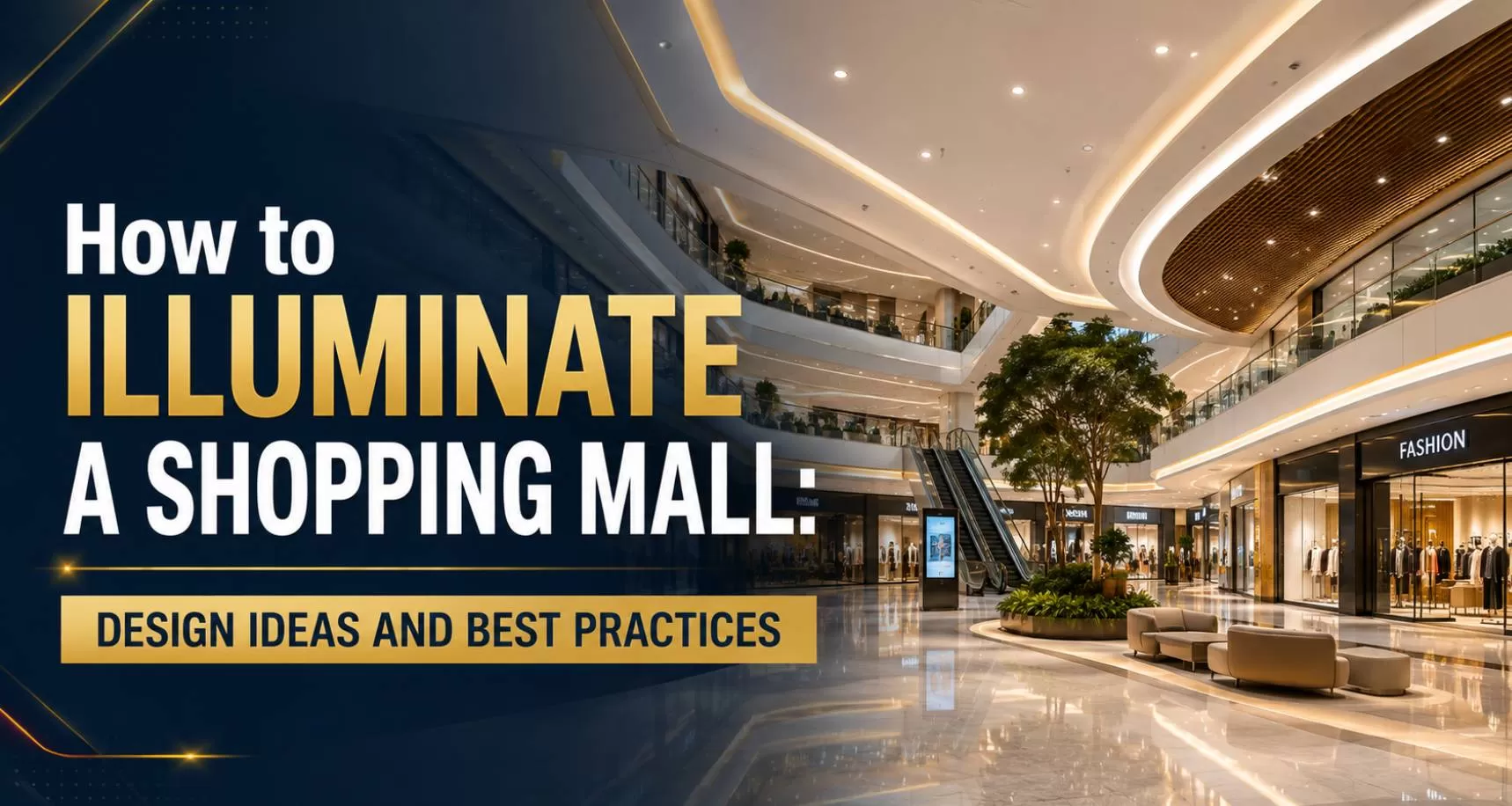
How to Illuminate a Shopping Mall: Design Ideas and Best Practices
Lighting plays an important role in how shoppers experience a commercial environment. In a shopping mall, lighting needs to do more than provide visibility. It should help people navigate the space comfortably, support different activities, and create an inviting atmosphere throughout the day.
A well-planned shopping mall light system can improve visibility across common areas, corridors, entrances, retail zones, food courts, parking areas, and other shared spaces while supporting energy efficiency and long-term operational performance.
For mall operators, the focus should be on creating a lighting environment that is functional, comfortable, reliable, and appropriate for the character of the property.
Why Lighting Matters in Shopping Malls
Shopping malls contain multiple environments within one building. A visitor may move from a bright entrance to a retail corridor, food court, elevator lobby, or parking area within minutes.
Each area has different lighting requirements.
Effective lighting can help:
Improve wayfinding and visibility
Create a comfortable shopping environment
Support retail displays
Improve safety in circulation areas
Enhance common spaces
Reduce unnecessary energy consumption
Maintain consistent illumination throughout the facility
The objective is not simply to make the mall brighter. It is to create the right visual environment for each space.
1. Start With the Mall's Different Lighting Zones
A successful lighting strategy should divide the mall into functional zones rather than using identical lighting throughout the property.
Entrances and Access Areas
Entrance areas create the transition between outdoor and indoor environments. Lighting should provide clear visibility while helping visitors comfortably adjust to the interior environment.
Common Corridors
Corridors require consistent illumination to support movement and wayfinding. Uniform lighting can also help prevent distracting bright and dark areas.
Retail Areas
Retail spaces require lighting that supports product visibility while allowing individual stores to maintain their own lighting identity.
Food Courts
Food courts combine seating, dining, movement, and social interaction. Lighting should provide comfortable visibility while creating an inviting atmosphere.
Staircases and Escalator Areas
These areas require clear illumination to support safe movement and improve visibility around changes in elevation.
Parking and Loading Areas
Parking facilities, loading zones, and service areas require practical lighting that supports vehicles, pedestrians, and staff, particularly during low-light conditions.
2. Use Layered Lighting
Using a single type of fixture throughout a shopping mall can create a flat and inconsistent environment.
Layered lighting combines different lighting approaches according to the function of each area.
This may include:
Ambient lighting for general illumination
Task lighting for specific activities
Accent lighting for selected architectural or retail elements
Decorative lighting where appropriate
Directional lighting for wayfinding
A layered strategy provides greater control over the visual environment and allows different areas to serve different purposes.
3. Choose LED Lighting for Efficiency and Reliability
Shopping malls typically operate for long hours, making energy efficiency an important consideration.
LED lighting can provide:
Lower energy consumption
Long operating life
Reduced maintenance requirements
Consistent illumination
Greater control flexibility
However, selecting LED fixtures should not be based on energy savings alone. Light quality, glare, distribution, reliability, maintenance access, and the intended application should also be considered.
4. Prioritize Visual Comfort
Visitors may spend several hours inside a shopping mall. Excessive brightness or poorly positioned fixtures can create unnecessary glare and visual discomfort.
When planning mall lighting, consider:
Glare control
Light distribution
Reflections
Contrast
Fixture positioning
Viewing angles
Comfortable lighting helps create a more pleasant environment for both visitors and employees.
5. Consider Natural Light
Many modern malls use skylights, atriums, glass entrances, and other sources of daylight.
Artificial lighting should complement available natural light rather than simply operate at full output throughout the day.
Lighting controls can help adjust artificial illumination according to changing daylight conditions, potentially improving energy efficiency while maintaining consistent visual conditions.
6. Use Lighting to Support Wayfinding
Large shopping malls can be difficult to navigate, particularly for first-time visitors.
Lighting can contribute to wayfinding by creating visual hierarchy between:
Main entrances
Corridors
Escalators
Elevators
Food courts
Common areas
Exit routes
Strategically differentiated lighting can help visitors understand the layout of the space without relying entirely on signage.
7. Plan Lighting for Maintenance
Shopping mall lighting can be challenging to maintain, particularly when fixtures are installed at significant heights or above busy public areas.
Before selecting fixtures, consider:
Accessibility
Product lifespan
Replacement requirements
Cleaning
Maintenance downtime
Long-lasting, reliable lighting can help reduce interruptions to mall operations.
Common Shopping Mall Lighting Mistakes
Several avoidable decisions can reduce lighting performance.
Common mistakes include:
Using identical lighting throughout every area
Focusing only on brightness
Ignoring glare
Overlooking natural daylight
Selecting fixtures based only on appearance
Neglecting maintenance accessibility
Failing to consider changing visitor patterns
Overlooking energy consumption
A successful lighting strategy should be based on how people actually use the mall.
How to Choose the Right Shopping Mall Light
Before selecting a shopping mall light, consider:
Area dimensions and ceiling height
Type of activity
Operating hours
Natural light availability
Required visual comfort
Maintenance access
Energy efficiency
Interior design
Future changes to the space
The right solution will vary between a retail corridor, food court, entrance, parking area, and service zone.
Conclusion
Shopping mall lighting should create a balance between visibility, comfort, efficiency, reliability, and the overall visitor experience. Different areas require different lighting strategies, and a well-planned system can help the entire facility operate more effectively.
From general illumination and corridor lighting to task lighting, retail support lighting, food court lighting, and parking illumination, each application should be evaluated according to its specific requirements.
At Tucana Lights, our focus is on developing research and design-driven lighting solutions that combine performance, reliability, efficiency, and thoughtful aesthetics. While our expertise is centered on lighting solutions rather than shopping mall facade lighting, our approach can support the broader indoor and functional lighting requirements of demanding commercial environments.
The goal of effective mall lighting is not simply to illuminate the building—it is to create a comfortable, safe, efficient, and visually engaging environment for the people who use it every day.