
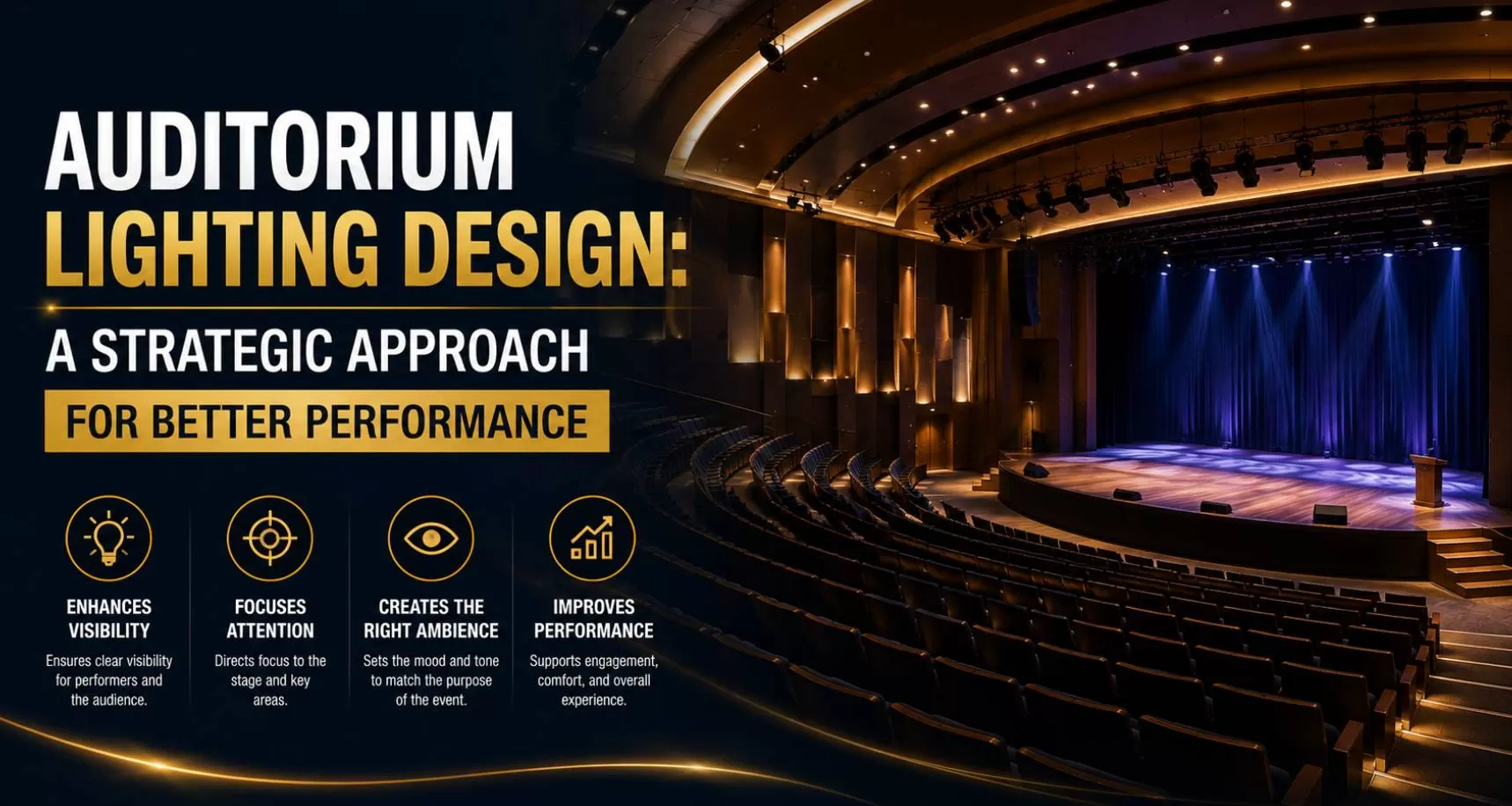
Auditorium Lighting Design: A Strategic Approach for Better Performance
Auditoriums are designed for more than simply presenting performances or events. They need to support clear visibility, audience comfort, stage presentation, movement, and the overall atmosphere of the space.
This makes lighting one of the most important elements of auditorium design.
A well-planned auditorium light system should balance performance, visual comfort, energy efficiency, aesthetics, and operational flexibility. Whether the space is used for conferences, cultural performances, educational programs, corporate events, or live entertainment, lighting needs to adapt to the way the auditorium is actually used.
Why Auditorium Lighting Design Matters
Auditorium lighting has to serve several purposes simultaneously. The audience needs comfortable visibility, performers need appropriate illumination, and staff need safe lighting for movement and operational activities.
Poorly designed lighting can result in:
Glare and visual discomfort
Uneven illumination
Poor stage visibility
Uncomfortable audience conditions
Higher energy consumption
Limited flexibility during events
A strategic lighting approach considers the entire auditorium rather than treating every fixture as an independent element.
1. Understand the Different Lighting Zones
An auditorium normally consists of several functional areas, and each requires a different lighting approach.
Stage Area
Stage lighting needs to provide clear visibility for performers, speakers, presentations, and other activities. The system should also allow different lighting scenes depending on the type of event.
Audience Seating
Seating areas require comfortable and controlled illumination. Lighting should allow people to find their seats and move safely without competing with the stage or presentation.
Aisles and Circulation Areas
Aisle lighting supports safe movement before, during, and after events. It should provide adequate visibility without creating distracting brightness.
Entrance and Lobby
Lobby and entrance lighting contributes to the first impression of the venue. It can combine functional illumination with architectural and decorative elements.
Backstage and Support Areas
Backstage corridors, dressing rooms, equipment areas, and service spaces require practical lighting that supports staff and performers.
2. Prioritize Visual Comfort
An auditorium can remain occupied for several hours, making visual comfort particularly important.
A well-designed lighting system should control:
Glare
Harsh contrasts
Excessive brightness
Reflections
Uneven illumination
The objective is not to make every area as bright as possible. Instead, lighting should provide appropriate visibility for each activity while maintaining a comfortable environment for the audience.
3. Use Layered Lighting
Using a combination of lighting types can make an auditorium more adaptable.
A layered approach may include:
General ambient lighting
Stage lighting
Accent lighting
Aisle lighting
Architectural lighting
Task lighting for operational areas
This allows individual zones to be controlled according to the event taking place.
For example, a conference may require strong speaker visibility and moderate audience lighting, while a theatrical performance may require greater contrast between the stage and seating area.
4. Choose Energy-Efficient LED Lighting
Auditoriums may operate for extended periods, particularly when used for multiple events each week.
LED lighting can provide:
Lower energy consumption
Long operating life
Reduced maintenance
Consistent illumination
Greater control flexibility
However, energy efficiency should be considered alongside light quality, reliability, visual comfort, and the specific requirements of the venue.
5. Consider Lighting Controls
Lighting controls are particularly valuable in auditoriums because different events require different lighting conditions.
A flexible control system can allow operators to create lighting scenes for:
Presentations
Conferences
Performances
Training sessions
Audience entry
Intermissions
Cleaning and maintenance
This improves operational flexibility while preventing the entire lighting system from operating at the same level unnecessarily.
6. Balance Performance With Interior Design
Lighting also contributes to the architectural character of an auditorium.
Modern fixtures can be incorporated into ceilings, walls, architectural elements, and seating areas to create a visually cohesive interior.
Pendant lights, linear lighting, recessed fixtures, accent lighting, and architectural solutions can be selected based on the design language of the venue.
The best auditorium lighting does not compete with the architecture. It complements it.
7. Plan for Safety and Emergency Visibility
Lighting design should also account for safe movement throughout the venue.
Entrances, exits, aisles, stairs, corridors, and other circulation areas require appropriate visibility. Emergency lighting should be considered as part of the overall safety strategy and designed according to applicable local requirements.
Common Auditorium Lighting Mistakes
Even sophisticated venues can experience lighting problems when planning is overlooked.
Common mistakes include:
Using the same lighting level throughout the auditorium
Ignoring glare from fixtures
Selecting lights based only on appearance
Overlooking aisle and circulation lighting
Failing to plan for different event types
Installing lighting without considering maintenance access
Underestimating the importance of lighting controls
A successful design begins with understanding how the auditorium will be used.
How to Choose the Right Auditorium Light
Before selecting fixtures, consider:
Auditorium size and ceiling height
Seating arrangement
Stage dimensions
Type of events hosted
Required flexibility
Natural light availability
Energy consumption
Maintenance access
Interior design requirements
These considerations help create a lighting system that performs effectively across different operating conditions.
Conclusion
Auditorium lighting design requires a balance between visibility, comfort, aesthetics, safety, and operational flexibility. The right lighting strategy can help audiences see comfortably, performers and speakers remain clearly visible, and facility operators manage different events more effectively.
An auditorium light should therefore be selected as part of a complete lighting strategy rather than as an isolated product decision.
At Tucana Lights, we take a research and design-driven approach to lighting, developing solutions for demanding commercial, industrial, architectural, and specialized environments. Our focus is on creating lighting that combines reliable performance with thoughtful design and long-term value.
For auditoriums, the goal is simple: create lighting that supports the event, enhances the space, and improves the experience of everyone inside it.