
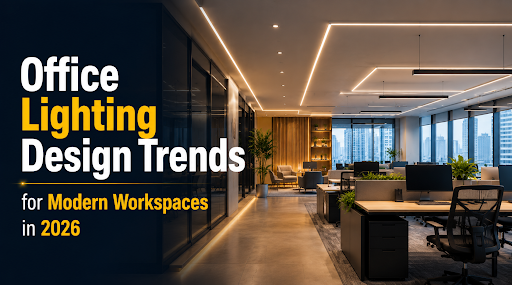
Office lighting in 2026 is no longer limited to bright ceiling fixtures and basic visibility. Modern workspaces now require lighting that supports productivity, employee well-being, energy efficiency, flexibility, and interior design.
As offices continue to evolve into more collaborative, hybrid, and experience-focused environments, lighting plays a major role in shaping how people work and feel throughout the day. The right lighting design can reduce visual fatigue, improve comfort, support concentration, and create a more professional workplace atmosphere.
Here are the top office lighting design trends shaping modern workspaces in 2026.
1. Human-Centric Lighting for Employee Well-Being
One of the biggest office lighting trends in 2026 is human-centric lighting. This approach focuses on how lighting affects comfort, mood, focus, and workplace experience.
Instead of using the same brightness throughout the day, modern office lighting is designed to feel more natural and comfortable. It supports employees by creating better visual conditions for work, meetings, collaboration, and relaxation.
Human-centric lighting is especially useful for:
Open office workstations
Meeting rooms
Creative zones
Breakout areas
Employee lounges
The goal is to create lighting that supports people, not just the physical space.
2. Layered Lighting for Flexible Workspaces
Modern offices are no longer designed around one type of activity. A single workspace may include focused work, team discussions, video calls, presentations, and informal collaboration.
This is why layered lighting has become an important design trend.
Layered lighting combines:
Ambient lighting for general illumination
Task lighting for focused work
Accent lighting for visual depth
Decorative lighting for ambience
Wall or ceiling lighting for architectural effect
This approach creates a more balanced and adaptable environment compared to relying only on standard ceiling lights.
3. Smart Lighting Controls
Smart lighting is becoming increasingly relevant in modern commercial offices. Businesses are looking for systems that can adjust based on occupancy, time of day, natural light availability, and space usage.
Smart lighting controls can help:
Reduce energy consumption
Improve user comfort
Support flexible office layouts
Lower operational costs
Create more efficient building management
For modern offices, smart lighting is not just a technology upgrade. It is a practical way to make workspaces more responsive and efficient.
4. Glare-Free Lighting for Screen-Based Work
Most office employees spend long hours working on screens. Poor lighting can create glare, reflections, eye strain, and discomfort.
In 2026, office lighting design is placing greater focus on visual comfort. This includes better fixture placement, diffused lighting, indirect illumination, and controlled brightness levels.
Good screen-friendly lighting should:
Reduce harsh reflections
Minimize direct glare
Create balanced brightness
Support comfortable viewing
Improve employee focus
This trend is especially important for workstations, meeting rooms, conference areas, and video-call spaces.
5. Linear Lighting for Clean Modern Interiors
Linear lights continue to be a preferred choice for modern office interiors because they offer both performance and design appeal.
Their clean, minimal appearance makes them suitable for contemporary workspaces, while their continuous illumination helps create a professional and organized look.
Linear lighting works well in:
Open offices
Corridors
Conference rooms
Reception areas
Coworking spaces
Executive cabins
This trend supports both function and aesthetics, making it ideal for businesses that want a modern and premium office environment.
6. Energy-Efficient LED Lighting
Energy efficiency remains a major priority for businesses in 2026. Offices are increasingly choosing LED lighting solutions that reduce electricity consumption while maintaining high-quality illumination.
Energy-efficient office lighting helps businesses:
Lower operating costs
Reduce maintenance needs
Support sustainability goals
Improve long-term performance
Create better workplace environments
However, modern lighting decisions should not focus only on saving energy. The best office lighting solutions balance efficiency with comfort, design, reliability, and user experience.
7. Biophilic and Natural-Looking Lighting
Biophilic office design continues to influence workplace interiors. This trend focuses on creating spaces that feel more connected to nature through natural materials, greenery, daylight, and softer lighting effects.
Lighting plays an important role in this approach.
Natural-looking lighting can help create a warmer, calmer, and more comfortable workplace atmosphere. It works especially well in employee lounges, reception areas, meeting rooms, and collaborative spaces.
This trend is not about making offices look decorative. It is about creating environments where people feel more comfortable and engaged.
8. Accent Lighting for Brand and Experience
Modern offices are increasingly designed to reflect a company’s identity. Lighting is now used to highlight brand elements, architectural details, feature walls, reception counters, and collaborative zones.
Accent lighting helps create:
Stronger first impressions
More attractive interiors
Better visual depth
Improved brand presentation
Premium workplace ambience
For client-facing offices, showrooms, and corporate spaces, accent lighting can significantly improve how visitors experience the environment.
9. Flexible Lighting for Hybrid Workspaces
Hybrid work has changed how offices are used. Some areas may be full during meetings but quiet during focused work hours. This requires lighting that can adapt to changing usage patterns.
Flexible lighting design supports:
Movable workstations
Multi-purpose meeting rooms
Collaboration zones
Hot-desking areas
Training rooms
Event spaces
Instead of designing lighting for a fixed layout, businesses are now choosing adaptable solutions that support future changes.
10. Minimal and Architectural Fixture Designs
In 2026, office lighting fixtures are becoming more refined, minimal, and integrated into the overall interior design.
Bulky and outdated fixtures are being replaced with sleeker lighting options that blend into the workspace while still delivering strong performance.
Popular choices include:
Slim linear lights
Recessed ceiling lights
Pendant lights
Indirect lighting systems
Integrated architectural fixtures
This trend helps offices look cleaner, more spacious, and more premium.
How to Choose the Right Office Lighting Design
Before finalizing office lighting, businesses should consider:
How each space is used
Number of operating hours
Natural light availability
Screen usage and glare concerns
Employee comfort requirements
Interior design goals
Energy efficiency expectations
Future layout changes
The best office lighting design should support productivity, comfort, aesthetics, and long-term operational value.
Common Office Lighting Mistakes to Avoid
Many offices underperform because lighting is planned too late in the design process.
Common mistakes include:
Using the same lighting across every office area
Ignoring glare and screen reflections
Choosing fixtures based only on appearance
Overlooking employee comfort
Focusing only on wattage or brightness
Not planning for future layout changes
Underestimating maintenance costs
A thoughtful lighting strategy can help businesses avoid these issues and create better work environments.
Conclusion
Office lighting design in 2026 is about creating workspaces that are brighter, smarter, more comfortable, and more adaptable. From human-centric lighting and smart controls to linear lights, glare-free illumination, biophilic design, and flexible lighting layouts, each trend reflects the changing needs of modern businesses.
The right lighting does more than improve visibility. It supports employee well-being, productivity, workplace experience, energy efficiency, and long-term business performance.
At Tucana Lights, we believe office lighting should combine performance, reliability, design, and user comfort. Our research and design-driven lighting solutions are developed to help modern workplaces create brighter, more productive, and future-ready environments.
A well-lit office is not just a better-looking office. It is a workspace designed for people, performance, and growth.