
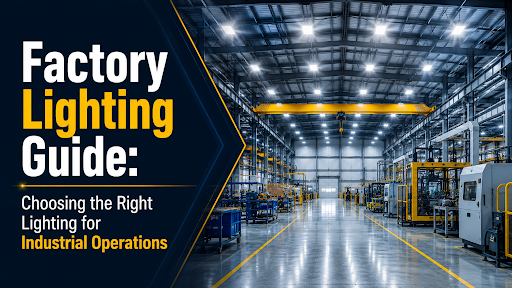
Factory lighting plays a major role in how safely, efficiently, and comfortably an industrial facility operates. From production floors and assembly lines to warehouses, inspection areas, loading bays, and maintenance zones, every part of a factory depends on clear and reliable illumination.
The right lighting system helps workers see better, move safely, perform tasks accurately, and maintain productivity throughout long operating hours. Poor lighting, on the other hand, can create shadows, glare, visual fatigue, and safety risks that affect daily operations.
This factory lighting guide explains how to choose the right lighting for industrial operations and what factors businesses should consider before upgrading or installing a new lighting system.
Why Factory Lighting Matters
Factories are demanding environments. They often include machinery, moving materials, elevated structures, detailed work areas, and continuous employee movement.
Effective factory lighting helps support:
Workplace safety
Operational productivity
Task accuracy
Employee comfort
Equipment visibility
Quality inspection
Energy efficiency
Long-term maintenance planning
Lighting should not be treated as a basic utility. It should be considered an important part of industrial infrastructure.
Understand the Requirements of Each Factory Area
Different areas within a factory require different lighting approaches. A single lighting solution may not work effectively across the entire facility.
Production Floors
Production areas need consistent illumination that supports machinery operation, employee movement, and daily manufacturing activities.
Assembly Lines
Assembly work often requires clear, uniform lighting to support accuracy and reduce visual fatigue.
Quality Inspection Areas
Inspection zones may need higher visual clarity to help workers identify defects, surface issues, or production inconsistencies.
Warehouses and Storage Areas
Storage zones require lighting that improves visibility across racks, aisles, and material handling areas.
Loading and Outdoor Areas
Loading docks, outdoor yards, and entry points need dependable lighting for safe vehicle movement and night operations.
Choose the Right Type of Factory Lighting
A successful factory lighting plan often combines multiple lighting solutions based on the function of each area.
1. High Bay LED Lights
High bay lights are ideal for factories with high ceilings and large open spaces. They provide broad illumination and are commonly used in production halls, warehouses, and industrial sheds.
Best for:
Manufacturing floors
Industrial buildings
Warehouses
Assembly areas
Key benefits:
Wide light coverage
Better visibility
Energy-efficient performance
Long service life
2. Linear LED Lights
Linear lights are suitable for factories with organized layouts, production lines, corridors, or workstations. They provide continuous and balanced illumination.
Best for:
Assembly lines
Packaging areas
Production corridors
Workshop zones
Key benefits:
Uniform light distribution
Reduced shadows
Clean and modern appearance
Improved visual comfort
3. Task Lighting
Task lighting provides focused illumination for specific work areas where detailed visibility is required.
Best for:
Inspection stations
Workbenches
Testing areas
Maintenance zones
Key benefits:
Better precision
Improved task accuracy
Reduced eye strain
Focused visibility
4. Flood Lighting
Flood lights are useful for outdoor factory spaces and large-area illumination.
Best for:
Loading docks
Outdoor storage yards
Factory entrances
Parking areas
Security zones
Key benefits:
Wide outdoor coverage
Improved safety
Better visibility during night operations
Reliable external illumination
Key Factors to Consider Before Selecting Factory Lighting
Choosing factory lighting should involve more than comparing wattage or price. Businesses should evaluate how the lighting will perform in real operating conditions.
Ceiling Height
High-ceiling spaces often require high bay lighting, while lower areas may need linear or ceiling-mounted fixtures.
Type of Work Performed
Detailed tasks require higher visual clarity, while general production areas need broad and consistent illumination.
Operating Hours
Factories that operate for long shifts need lighting systems designed for dependable long-term performance.
Glare Control
Excessive glare can reduce comfort and affect concentration. Fixtures should provide clear visibility without harsh brightness.
Maintenance Access
Factories with high ceilings or continuous operations should choose lighting systems that reduce frequent maintenance needs.
Energy Efficiency
LED lighting helps reduce energy consumption while supporting better performance and longer operating life.
Future Expansion
Lighting should support future layout changes, production expansion, and modernization plans.
Common Factory Lighting Mistakes to Avoid
Many factory lighting projects underperform because of avoidable decisions.
Common mistakes include:
Selecting lights only based on cost
Using the same lighting across all areas
Ignoring glare and shadow control
Choosing wattage over lighting quality
Overlooking maintenance requirements
Not considering future facility changes
Underestimating long-term operating costs
A good factory lighting strategy should support how the facility actually operates.
Benefits of Choosing the Right Factory Lighting
A well-designed lighting system can create measurable benefits for industrial operations.
Improved Safety
Better visibility helps employees identify hazards, move safely, and operate equipment with more confidence.
Higher Productivity
Comfortable and consistent lighting supports smoother workflows and better focus during long shifts.
Better Quality Control
Clear illumination helps inspection teams identify product defects and maintain production standards.
Lower Operating Costs
Energy-efficient LED lighting helps reduce electricity usage and maintenance expenses.
Improved Employee Comfort
Balanced lighting reduces visual fatigue and creates a better working environment.
Conclusion
Choosing the right factory lighting is essential for creating safer, more efficient, and more productive industrial operations. Every factory area has different requirements, and lighting should be selected based on actual usage, ceiling height, workflow, maintenance access, and long-term business goals.
The most effective factory lighting systems combine performance, reliability, energy efficiency, and application-specific design.
At Tucana Lights, we develop research and design-driven lighting solutions for factories, warehouses, industrial buildings, and specialized commercial environments. Our focus is on creating lighting systems that support real operational needs while delivering long-term reliability and value.
With the right lighting strategy, factories can improve visibility, reduce operational challenges, and create better working environments for the future.