
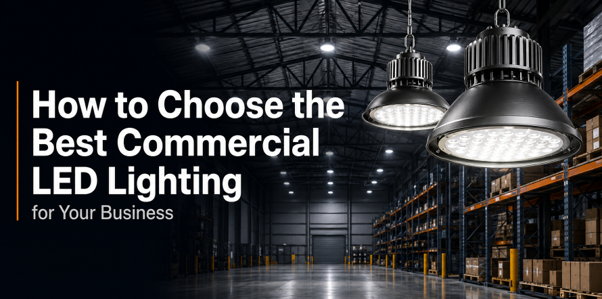
Lighting decisions have changed dramatically over the last decade.
Businesses today no longer select lighting based solely on brightness or energy savings. Commercial environments are increasingly designed around productivity, customer experience, employee comfort, operational efficiency, sustainability, and long-term value.
Whether you operate a corporate office, retail showroom, warehouse, industrial facility, educational campus, hospitality space, or mixed-use commercial property, the right lighting strategy can influence how your business performs every day.
Modern commercial LED lighting is expected to do far more than illuminate a space—it should support business outcomes.
This guide explores how businesses can evaluate and choose commercial LED lighting solutions that align with operational requirements, user expectations, and future growth.
Why Commercial Lighting Selection Matters
Lighting affects nearly every aspect of a commercial environment.
It influences:
- Employee productivity
- Customer perception
- Workplace comfort
- Energy efficiency
- Safety and navigation
- Maintenance planning
- Operational performance
- Space aesthetics
Poor lighting decisions often result in higher ownership costs, uncomfortable environments, and reduced long-term performance.
Well-designed lighting contributes to environments that operate more efficiently and create better experiences for the people using them.
Start With the Purpose of the Space
The first step in selecting commercial lighting is understanding how the environment functions.
Different spaces require different lighting strategies.
Offices
Workplaces benefit from balanced illumination that supports concentration, comfort, and collaboration.
Retail and Showrooms
Lighting should improve product visibility while enhancing customer engagement and overall ambience.
Warehouses and Logistics Facilities
Visibility, safety, and operational continuity become primary priorities.
Industrial and Commercial Buildings
These environments often benefit from integrated commercial and industrial LED lighting solutions designed for performance and long operating hours.
Hospitality and Public Spaces
Comfort, atmosphere, and architectural integration typically become key considerations. Lighting should support how people use the environment—not simply fill the space with brightness.
Evaluate Lighting Performance, Not Just Wattage
One of the most common mistakes businesses make is comparing lighting products only by wattage. Modern lighting decisions should consider broader performance indicators.
Light Distribution
Uniform illumination improves comfort and reduces dark zones.
Visual Comfort
Reduced glare creates more pleasant environments for employees and visitors.
Lighting Consistency
Stable performance helps maintain a better user experience over time.
Operational Efficiency
Lighting should support business activities rather than create visual fatigue. Commercial lighting should be evaluated based on how effectively it performs within the actual environment.
Prioritize Long-Term Ownership Value
The lowest upfront cost does not always create the best long-term outcome. Businesses increasingly evaluate lighting based on total ownership value.
Consider:
- Energy usage
- Product lifespan
- Maintenance frequency
- Operational interruptions
- Replacement costs
- Reliability over time
A well-engineered lighting system often creates greater value throughout its lifecycle.
Consider Energy Efficiency as Part of a Larger Strategy
Energy reduction remains important—but modern businesses now view lighting through a broader operational lens.
Energy-efficient commercial LED lighting can help:
- Lower operating costs
- Support sustainability initiatives
- Improve environmental performance
- Reduce facility-wide energy demand
However, efficiency should be balanced with visibility, reliability, and user comfort. The most effective solutions improve overall business performance—not just electricity consumption.
Understand the Importance of Thermal Management
One factor that is often overlooked during lighting selection is thermal performance.
Heat directly influences:
- Product lifespan
- Illumination consistency
- System reliability
- Maintenance frequency
This becomes especially important in large commercial and industrial environments where lighting systems operate continuously. Businesses evaluating industrial LED lighting solutions increasingly prioritize products engineered for stable long-term performance under real operating conditions.
Design for People, Not Only Infrastructure
Commercial environments today are becoming increasingly human-centric.
Lighting influences how people:
- Work
- Shop
- Interact
- Focus
- Navigate
- Experience spaces
Businesses increasingly invest in lighting systems that improve comfort while creating environments that feel modern and inviting.
Human-focused lighting strategies can contribute positively to employee experience, customer engagement, and workplace satisfaction.
Select Lighting That Supports Future Growth
Commercial spaces are constantly evolving to meet changing business needs, operational demands, and user expectations. Lighting decisions should therefore extend beyond current requirements and support long-term flexibility and performance.
Businesses should invest in lighting systems that can adapt as spaces expand, layouts change, and operational priorities evolve over time. When evaluating commercial lighting, consider whether your strategy can support:
Layout Changes
Lighting should continue delivering effective illumination even as workspaces, retail areas, or operational zones are reconfigured.
Space Expansion
Scalable lighting solutions help maintain consistency and simplify future upgrades as facilities grow.
Extended Operating Hours
As businesses increase operating schedules, lighting systems should continue performing reliably with minimal maintenance requirements.
Sustainability Goals
Energy-efficient lighting supports broader environmental initiatives and long-term operational efficiency.
Maintenance Planning
Reliable systems reduce disruptions and make facility management more predictable over time.
Future Modernization Initiatives
Lighting infrastructure should remain adaptable to future improvements in building design, operational requirements, and technology adoption.
Rather than treating lighting as a short-term purchase, businesses should view it as infrastructure that contributes to long-term growth, operational resilience, and better user experiences.
Common Mistakes Businesses Should Avoid
Many commercial lighting projects fail to deliver expected results—not because of the products themselves, but because of avoidable planning and selection mistakes. Taking a strategic approach early can improve long-term performance and reduce unnecessary costs.
Selecting Products Based Only on Price
Choosing lighting solely based on upfront cost can lead to lower efficiency, shorter lifespan, and increased maintenance expenses over time.
Prioritizing Wattage Over Lighting Quality
Lower or higher wattage does not automatically mean better performance. Factors such as illumination quality, distribution, and visual comfort are equally important.
Ignoring User Comfort
Lighting directly impacts how people work, interact, and experience a space. Excessive glare or uneven illumination can affect comfort and productivity.
Overlooking Maintenance Requirements
Frequent replacements and difficult servicing can increase operational disruptions and long-term ownership costs.
Underestimating Lifecycle Costs
The real value of a lighting system should be measured across installation, operation, maintenance, and long-term performance—not initial investment alone.
Using the Same Lighting Strategy Across Different Environments
Offices, retail spaces, warehouses, and industrial facilities each require different lighting approaches to perform effectively.
Thoughtful planning and application-focused decisions help businesses create lighting environments that remain efficient, reliable, and effective over time.
Questions to Ask Before Selecting Commercial LED Lighting
Before selecting a commercial lighting solution, it is important to evaluate both current operational requirements and long-term business goals. Asking the right questions early helps avoid unnecessary upgrades, maintenance costs, and performance issues later.
What activities happen within the space?
Different environments require different lighting approaches. Offices, retail spaces, warehouses, and industrial facilities each have unique visibility and performance requirements.
How many hours does the lighting operate?
Operating duration affects energy usage, product lifespan, and maintenance planning—especially in facilities with extended working hours.
What level of visual comfort is required?
Lighting should support productivity and user experience by minimizing glare and maintaining balanced illumination.
What are the maintenance expectations?
Reliable lighting solutions help reduce operational interruptions and lower long-term maintenance efforts.
How important are aesthetics?
Lighting should complement the architecture and contribute positively to how the space looks and feels.
Will the facility expand in the future?
Selecting adaptable lighting solutions can support future growth and reduce redesign requirements.
What business outcomes should lighting support?
The best lighting decisions align with broader goals such as efficiency, comfort, operational performance, and long-term value.
These questions often lead to more informed decisions and lighting systems that perform effectively over time.
Choosing Lighting That Works for Your Business
Commercial lighting is no longer simply a facility expense—it has become an important contributor to operational performance, workplace experience, and long-term efficiency.
The best commercial LED lighting solutions combine engineering reliability, visual comfort, operational value, and thoughtful design.
Businesses that take a strategic approach to lighting often create environments that perform better, operate more efficiently, and deliver stronger experiences for the people who use them.
As expectations continue to evolve, choosing lighting that balances performance, efficiency, and long-term value becomes increasingly important for building future-ready commercial spaces.