
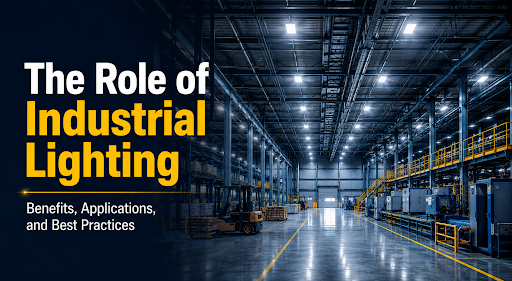
Industrial environments are built around efficiency, precision, safety, and operational continuity. While machinery, infrastructure, and workflow systems often receive the most attention, lighting remains one of the most influential elements affecting how industrial facilities perform every day.
Industrial lighting is no longer viewed as basic facility infrastructure. Today, businesses recognize lighting as an operational asset that supports productivity, workplace safety, employee comfort, maintenance efficiency, and long-term cost management.
Modern industrial LED lighting solutions are transforming how facilities operate by delivering dependable illumination, improving visibility, reducing energy consumption, and creating better working environments.
Understanding the Role of Industrial Lighting
Industrial lighting is designed to illuminate environments where operational performance and reliability are essential. These spaces often include manufacturing plants, warehouses, processing facilities, logistics centers, engineering units, production floors, and industrial buildings.
Unlike conventional lighting, industrial environments demand systems capable of performing consistently under challenging conditions such as:
- Extended operating hours
- Elevated ceiling heights
- Large open spaces
- Dust and environmental exposure
- Continuous workflow operations
- Equipment-intensive environments
Well-designed lighting supports both operational outcomes and workplace experience.
Benefits of Industrial LED Lighting Solutions
As industrial facilities modernize, organizations increasingly adopt LED technology because of its ability to support operational goals beyond energy savings.
Improved Workplace Visibility
Visibility directly influences how effectively industrial operations are performed.
High-quality illumination supports:
- Equipment operation
- Inspection processes
- Material handling
- Assembly activities
- Inventory management
- Workplace navigation
Better visibility contributes to improved accuracy and more efficient workflows.
Enhanced Safety Across Industrial Environments
Industrial facilities often involve moving equipment, elevated structures, production activities, and high employee movement.
Proper lighting helps reduce workplace risks by:
- Improving hazard visibility
- Supporting safe movement
- Reducing shadows
- Enhancing emergency visibility
- Improving awareness throughout operational areas
Lighting remains an important component of workplace safety planning.
Increased Productivity and Operational Efficiency
Employee performance is influenced by environmental conditions, including lighting quality.
Consistent illumination can support:
- Better concentration
- Reduced visual fatigue
- Improved task accuracy
- Faster operational workflows
- More comfortable working conditions
When employees can clearly see and navigate their surroundings, operations tend to become more efficient.
Reduced Energy Consumption
Energy efficiency continues to be one of the major advantages of industrial LED lighting solutions.
Compared with traditional lighting technologies, modern LED systems are designed to provide:
- Lower power consumption
- Higher illumination efficiency
- Reduced heat generation
- Improved operating economics
This helps organizations optimize operational expenditure over time.
Lower Maintenance Requirements
Industrial facilities often operate continuously, making maintenance interruptions costly.
Long-life LED lighting systems help organizations:
- Reduce replacement frequency
- Minimize maintenance downtime
- Improve operational continuity
- Lower ownership costs
Reliable lighting contributes to smoother daily operations.
Common Applications of Industrial Lighting
Industrial lighting requirements vary depending on the function and operating conditions of each environment.
Manufacturing Facilities
Production environments require consistent illumination to support machinery operation, quality inspections, and employee safety.
Warehouses and Distribution Centers
Warehouse lighting helps improve visibility across storage zones, inventory areas, and logistics operations.
Processing Plants
Reliable illumination supports controlled environments where precision and operational continuity are essential.
Industrial Buildings
Large facilities require lighting systems capable of delivering broad, uniform illumination.
Engineering and Fabrication Units
Detailed work environments benefit from lighting that improves accuracy and visual clarity.
Logistics and Fulfillment Centers
High-performance lighting supports efficient movement, handling, and operational productivity.
Best Practices for Industrial Lighting Design
Selecting lighting products alone is not enough. Effective industrial lighting requires a thoughtful approach to system design and facility requirements.
Understand the Purpose of Each Space
Different operational areas require different lighting strategies. Production zones, inspection stations, warehouse aisles, offices, and utility areas all have unique illumination needs.
Prioritize Uniform Illumination
Uneven lighting can create visual discomfort and reduce operational effectiveness.
Balanced light distribution helps:
- Improve visibility
- Reduce shadows
- Support safer environments
- Enhance user comfort
Consider Ceiling Height and Facility Layout
Large industrial facilities often require lighting systems specifically designed for elevated mounting positions and broad coverage. Fixture selection and placement should align with actual operational requirements.
Focus on Visual Comfort
Excessive glare and inconsistent brightness can affect concentration and comfort. Industrial lighting systems should support comfortable working conditions throughout extended operating periods.
Evaluate Long-Term Performance
Lighting decisions should consider:
- Product lifespan
- Reliability
- Maintenance requirements
- Operating efficiency
- Total ownership cost
Long-term value often delivers better outcomes than short-term cost savings.
Support Sustainability Objectives
Modern industrial facilities increasingly prioritize environmental responsibility. Energy-efficient lighting systems can support broader sustainability and operational improvement initiatives.
Industrial Lighting as a Strategic Business Investment
Industrial lighting has evolved from being a facility requirement into a strategic contributor to operational performance.
Organizations today expect lighting systems to support:
- Safety
- Productivity
- Employee experience
- Reliability
- Operational efficiency
- Long-term business performance
By approaching lighting as an integrated part of facility design, businesses can create environments that perform more effectively over time.
Looking Ahead: The Future of Industrial Lighting
Industrial environments continue to evolve through automation, smarter infrastructure, and growing performance expectations.
Lighting systems are expected to evolve alongside these changes by becoming more efficient, adaptable, and focused on delivering measurable operational value.
Modern industrial LED lighting solutions are helping organizations create facilities that are safer, more efficient, and better prepared for future demands.
The most effective lighting systems do more than illuminate—they support how industrial spaces operate, perform, and grow over time.