
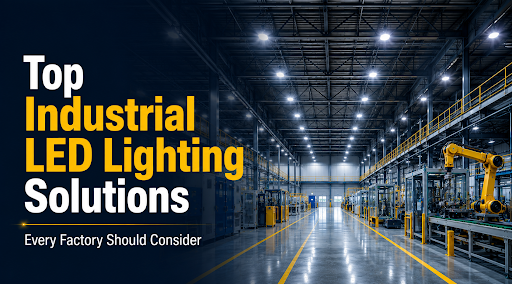
Factory environments depend on consistency, precision, and operational efficiency. From production floors and assembly lines to storage areas and inspection zones, every activity relies on clear visibility and dependable working conditions.
Lighting is one of the most overlooked contributors to industrial performance. Yet the right lighting system can influence employee productivity, workplace safety, maintenance planning, energy usage, and the overall efficiency of factory operations.
As manufacturing facilities continue to modernize, industrial LED lighting has become the preferred choice for businesses seeking long-term performance and better operational outcomes.
This guide explores the most effective industrial LED lighting solutions that factories should consider and how each solution supports different operational requirements.
Why Factory Lighting Matters More Than Ever
Industrial facilities operate differently from conventional commercial spaces.
Factories often involve:
- Long operating hours
- Machinery-intensive processes
- High ceilings
- Multiple operational zones
- Continuous movement of materials and personnel
- Quality inspection activities
Lighting must perform consistently across these conditions while maintaining visibility and minimizing operational disruption.
Well-designed lighting systems help factories:
- Improve workplace safety
- Support employee productivity
- Enhance process accuracy
- Reduce maintenance downtime
- Improve operational efficiency
- Lower energy consumption
Selecting the right solution begins with understanding how different lighting technologies support different environments.
1. High Bay LED Lights for Production Floors and Large Facilities
High bay LED lighting is one of the most widely used solutions in industrial environments. These systems are specifically designed for facilities with elevated ceilings and large operational areas where broad and uniform illumination is essential.
Best suited for:
- Manufacturing facilities
- Assembly plants
- Industrial sheds
- Warehouses
- Distribution centers
Key benefits:
- Consistent illumination across large areas
- Improved worker visibility
- Reduced shadows
- Lower maintenance requirements
- Long operational life
Factories with high ceilings often benefit significantly from high bay lighting because of its ability to provide broad and efficient coverage.
2. Linear LED Lighting for Continuous Workspaces
Linear lighting systems are increasingly used in modern manufacturing environments because of their ability to provide clean and evenly distributed illumination. These solutions work particularly well in areas where continuous visibility is important.
Best suited for:
- Production lines
- Engineering units
- Packaging facilities
- Quality control zones
Key benefits:
- Uniform lighting distribution
- Reduced glare
- Improved visual comfort
- Contemporary industrial aesthetics
Linear lighting can help create more comfortable environments for employees performing repetitive or precision-based tasks.
3. Industrial Flood Lighting for Utility and Outdoor Areas
Factory operations often extend beyond indoor production spaces. Outdoor infrastructure such as loading areas, service roads, parking spaces, and operational yards also require dependable illumination.
Industrial flood lighting is designed to provide wide-area visibility across external environments.
Best suited for:
- Loading docks
- Industrial campuses
- Outdoor storage
- Access roads
- Utility zones
Key benefits:
- Broad illumination coverage
- Enhanced site safety
- Improved operational visibility
- Long-term reliability
Proper outdoor lighting supports both security and operational continuity.
4. Task Lighting for Inspection and Precision Work
Some factory activities require higher visual accuracy than general facility lighting can provide. Task lighting helps provide focused illumination for detailed operations.
Best suited for:
- Inspection stations
- Assembly work
- Equipment servicing
- Laboratory environments
Key benefits:
- Improved visibility for precision work
- Better inspection accuracy
- Reduced eye strain
- Increased operational consistency
Factories performing detailed manufacturing processes often benefit from combining task lighting with general illumination.
5. Warehouse and Storage Lighting Solutions
Storage and logistics areas require lighting systems designed for visibility across aisles, racks, and movement zones. Warehouse lighting supports efficient inventory handling and operational workflows.
Best suited for:
- Material storage
- Inventory management
- Logistics operations
- Dispatch areas
Key benefits:
- Improved visibility
- Enhanced safety
- Better inventory accuracy
- Reduced operational interruptions
Modern LED warehouse lighting helps improve both efficiency and user experience.
6. Office and Administrative Lighting Within Industrial Facilities
Industrial facilities often include administrative and collaborative spaces that require a different lighting approach. Office environments benefit from solutions designed for comfort and productivity.
Best suited for:
- Administrative offices
- Meeting rooms
- Reception areas
- Employee facilities
Key benefits:
- Improved employee comfort
- Better workplace experience
- Reduced visual fatigue
- Professional environment creation
Integrated factory lighting strategies should consider both operational and people-focused environments.
Factors to Consider Before Choosing Industrial LED Lighting
Selecting industrial lighting involves more than comparing fixture specifications. Consider the following before making decisions:
Ceiling Height
Lighting performance changes significantly based on installation height.
Facility Layout
Open production areas and segmented workspaces require different approaches.
Operating Hours
Continuous operations require highly reliable lighting systems.
Maintenance Accessibility
Difficult-to-access fixtures should prioritize longevity and reduced maintenance.
Energy Goals
Lighting should support broader efficiency and sustainability objectives.
Employee Experience
Comfort and visibility influence both performance and workplace satisfaction.
Common Mistakes to Avoid
Even well-planned factory projects can encounter lighting challenges.
Avoid these common mistakes:
- Choosing products based only on initial cost
- Ignoring light distribution requirements
- Overlooking glare control
- Treating all operational areas equally
- Focusing only on wattage instead of performance
- Underestimating maintenance costs
A thoughtful lighting strategy delivers stronger long-term value.
Building Better Factories Through Better Lighting
Industrial lighting directly affects how efficiently a facility operates.
The most effective factories combine productivity, safety, reliability, and employee experience—and lighting supports each of these objectives.
From high bay lighting and warehouse illumination to precision task lighting and administrative environments, selecting the right industrial LED lighting solutions helps businesses create facilities that perform consistently over time.
As industrial environments continue to evolve, investing in lighting systems designed for performance, efficiency, and long-term reliability becomes increasingly important.
The right lighting does more than illuminate a factory—it supports how the entire operation performs.