
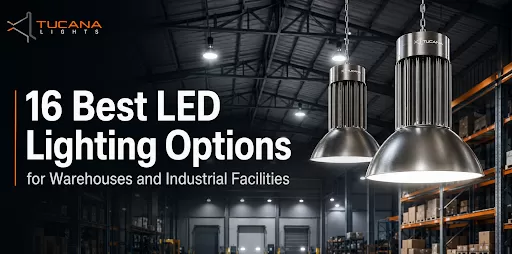
Warehouses and industrial facilities need lighting systems that can support visibility, safety, productivity, and long operating hours. Unlike regular commercial spaces, these environments often include high ceilings, wide floor areas, storage racks, machinery zones, loading bays, inspection areas, and continuous movement of people and materials.
Choosing the right LED lighting option is not only about brightness. It is about selecting lighting that improves how the facility functions every day. A well-planned lighting system can reduce dark spots, improve worker comfort, lower maintenance requirements, and support long-term operational efficiency.
Below are 16 effective LED lighting options warehouses and industrial facilities should consider, including suitable solutions from Tucana Lights’ product range.
1. Heat Tube Cooled Highbay Lights
Heat Tube Cooled Highbay Lights are one of the most suitable options for large industrial spaces with elevated ceilings. These lights are designed for demanding environments where consistent performance and thermal efficiency are important.
They are ideal for:
- Manufacturing facilities
- Warehouses
- Industrial sheds
- Production floors
- Large indoor workspaces
For facilities that operate for long hours, heat management becomes extremely important. Better thermal control helps support lighting performance and long-term reliability.
2. HT Series Industrial Lights
Tucana’s HT Series Lights are suitable for industrial environments that need powerful and dependable illumination. These lights are designed for large spaces where standard lighting may not provide sufficient visibility or long-term performance.
They are useful for:
- Heavy engineering units
- Factory floors
- High-ceiling warehouses
- Industrial production areas
This type of lighting is especially useful where brightness, durability, and operational reliability are equally important.
3. High Bay LED Lights for Warehouses
High bay LED lights are among the most common warehouse lighting options. They are designed to illuminate large spaces from higher mounting points and are suitable for facilities with tall ceilings.
They help improve:
- Aisle visibility
- Floor-level illumination
- Safety in movement areas
- Inventory handling accuracy
For warehouses, high bay lighting should provide uniform coverage rather than simply high brightness.
4. Highfin Industrial Lights
Tucana Highfin Lights are suitable for factories, godowns, warehouses, and industrial buildings where reliable lighting performance is required. These lights can be considered for areas that demand strong illumination with long operating hours.
They are suitable for:
- Godowns
- Factory work areas
- Storage facilities
- Industrial production zones
Highfin-style lighting is useful when facilities require dependable industrial-grade lighting with focused performance.
5. Beamstream Linear Industrial Lights
Beamstream Linear Industrial Lights are a strong option for facilities that need clean, continuous, and evenly distributed illumination. Linear lighting works well in organized industrial layouts where visibility needs to remain consistent across long work areas.
Best suited for:
- Warehouse aisles
- Assembly lines
- Packaging areas
- Production corridors
- Industrial workstations
Linear lights are especially useful where shadow reduction and directional visibility are important.
6. Bay Lights for Medium and Large Spaces
Bay lights are suitable for warehouses, workshops, commercial facilities, and industrial buildings that require broad indoor illumination. They work well in spaces where general lighting must support daily operations without creating excessive glare.
Useful for:
- Storage spaces
- Commercial warehouses
- Workshops
- Utility areas
- General industrial halls
Bay lights are often selected where facilities need a balance of efficiency, coverage, and reliability.
7. Architectural Baylights
Architectural Baylights are useful for industrial and commercial spaces where lighting performance and appearance both matter. These are suitable for environments that need strong illumination but also require a more refined visual design.
Best applications include:
- Premium warehouses
- Showroom-style industrial spaces
- Large commercial interiors
- Facility reception zones
- Industrial-commercial buildings
This option works well where lighting should enhance both function and the overall look of the space.
8. Parabolic Lights
Parabolic lights are useful in areas where visual comfort, glare control, and directed illumination are important. In industrial facilities, these may be considered for spaces where employees perform focused tasks or where lighting needs to feel more controlled.
Suitable areas include:
- Workstations
- Inspection zones
- Office sections within factories
- Administrative areas
- Controlled task environments
Parabolic lighting helps create more comfortable visual conditions compared to harsh, uncontrolled illumination.
9. LED Flood Lights for Outdoor Industrial Areas
Warehouses and factories often need lighting beyond indoor spaces. LED flood lights are suitable for outdoor areas that require wide coverage and dependable visibility.
They are useful for:
- Loading docks
- Storage yards
- Parking zones
- Factory campuses
- Outdoor movement areas
- Security lighting
Good outdoor lighting improves safety, supports night operations, and helps create better visibility around the facility.
10. Linear Aisle Lighting
Linear aisle lighting is ideal for warehouses with organized rack systems. Instead of lighting the entire space equally, this approach focuses illumination where people and equipment move most often.
Best suited for:
- Rack aisles
- Picking areas
- Inventory zones
- Fulfillment centers
- Storage corridors
This lighting option improves visibility between racks and helps employees identify products more accurately.
11. Task Lighting for Inspection Areas
Some warehouse and industrial tasks require more detailed visibility than general lighting can provide. Task lighting is useful in areas where employees inspect products, check components, pack goods, or perform precision work.
Suitable for:
- Quality inspection tables
- Packing stations
- Maintenance benches
- Assembly points
- Testing areas
Task lighting supports accuracy and reduces the need to over-light the entire facility.
12. LED Panel Lights for Workshop and Support Areas
LED panel lights are useful for indoor support areas within warehouses and industrial facilities. These spaces may not require heavy-duty high bay lighting but still need comfortable and uniform illumination.
Best suited for:
- Workshop offices
- Control rooms
- Staff areas
- Maintenance rooms
- Administrative zones
Panel lights help create visually comfortable environments for employees working in support spaces.
13. IP-Rated LED Lights for Dust and Moisture-Prone Areas
Some industrial spaces require lighting that can handle dust, moisture, or more demanding operating conditions. IP-rated LED lights are useful where durability and protection are important.
Suitable for:
- Food processing units
- Cold storage areas
- Utility zones
- Industrial wash areas
- Semi-exposed environments
These lighting systems are helpful where standard fixtures may not offer enough protection.
14. Cold Storage LED Lighting
Cold storage facilities need lighting that can perform reliably in low-temperature environments. Standard lighting may not always be suitable for such conditions.
Best suited for:
- Cold rooms
- Refrigerated warehouses
- Frozen storage areas
- Food and pharma storage spaces
Cold storage lighting should offer dependable performance, low heat output, and reliable operation under temperature-controlled conditions.
15. Temporary Site Lights
Temporary site lights are useful for construction areas, industrial expansion projects, maintenance work, and night-shift operations. These lights support visibility where permanent lighting is not yet installed or where flexible illumination is required.
Useful for:
- Construction sites
- Industrial maintenance zones
- Emergency work areas
- Temporary storage spaces
- Night operations
Temporary lighting improves safety and helps teams continue work efficiently in changing environments.
16. Integrated Warehouse Lighting Systems
The best warehouse lighting approach often combines multiple lighting solutions rather than relying on one fixture type throughout the facility.
An integrated system may include:
- High bay lights for large open areas
- Linear lights for aisles
- Flood lights for outdoor zones
- Task lights for inspection stations
- Panel lights for support areas
- IP-rated lights for demanding spaces
This approach ensures every area receives lighting based on its actual function.
How to Choose the Right LED Lighting Option
Before selecting lighting for a warehouse or industrial facility, businesses should evaluate:
- Ceiling height
- Facility layout
- Operating hours
- Type of work performed
- Storage rack arrangement
- Maintenance accessibility
- Safety requirements
- Energy efficiency goals
- Future expansion plans
The right lighting system should support how the facility operates, not just meet a basic brightness requirement.
Common Mistakes to Avoid
Many warehouse lighting projects fail to deliver expected results because of avoidable decisions.
Avoid:
- Choosing lights based only on price
- Using the same fixture across all areas
- Ignoring glare and shadow control
- Overlooking maintenance access
- Prioritizing wattage over visibility
- Forgetting outdoor and support areas
- Underestimating long-term operating costs
A practical lighting strategy should be based on application, performance, and long-term reliability.
Conclusion
Warehouses and industrial facilities need lighting systems that support safety, productivity, visibility, and operational efficiency. From Heat Tube Cooled Highbay Lights and Highfin Industrial Lights to Beamstream Linear Lights, Bay Lights, Parabolic Lights, flood lights, task lights, and integrated lighting systems, each option has a specific role in creating a better working environment.
Tucana Lights brings a research and design-driven approach to industrial lighting, focusing on performance, reliability, and practical application needs. Its product range includes solutions designed for factories, warehouses, godowns, showrooms, indoor stadiums, and specialized industrial environments.
For businesses planning a new facility or upgrading an existing one, choosing the right LED lighting solution can create long-term value through better visibility, reduced maintenance, improved safety, and more efficient operations.