
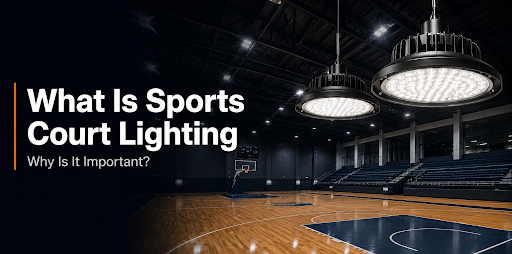
Sports facilities are designed to create environments where athletes can perform at their best and spectators can enjoy every moment with clarity and comfort. While the quality of the playing surface, equipment, and infrastructure often receives significant attention, lighting remains one of the most influential factors affecting how a sports environment performs.
Sports court lighting is not simply about making a court visible—it plays a direct role in athlete performance, safety, visual comfort, audience experience, and the overall usability of the facility.
Whether for recreational courts, educational institutions, indoor sports complexes, or professional venues, a well-designed lighting system helps create spaces that support both performance and experience.
What Is Sports Court Lighting?
Sports court lighting refers to lighting systems specifically designed to illuminate sports playing areas in a way that supports visibility, movement, accuracy, and comfort.
Unlike general lighting, sports lighting must account for factors such as:
- Playing area dimensions
- Speed of movement
- Uniform light distribution
- Glare control
- Visual comfort
- Viewing conditions
- Operating schedules
The objective is to create an environment where players can clearly see the ball, court markings, teammates, and surrounding movement without visual distractions.
Sports court lighting is commonly used across:
- Basketball courts
- Badminton courts
- Tennis courts
- Volleyball courts
- Indoor stadiums
- Multi-purpose sports facilities
- School and college sports complexes
- Recreational centers
Every sports environment has unique lighting requirements based on how the space is used.
Why Is Sports Court Lighting Important?
Lighting directly influences how athletes perform and how users experience the space. Well-designed sports lighting supports more than visibility—it improves the overall functionality of the facility.
Improves Player Performance
Sports often require rapid movement, fast decision-making, and continuous visual tracking.
Consistent illumination helps athletes:
- Track movement more accurately
- Improve reaction time
- Maintain focus
- Perform more confidently
Lighting quality becomes especially important in sports involving high-speed movement.
Enhances Visibility Across the Entire Court
Uneven lighting creates dark zones and inconsistent playing conditions.
Balanced illumination helps:
- Improve court visibility
- Support fair play
- Reduce visual interruptions
- Maintain consistent conditions throughout the playing area
Uniform visibility helps players perform more effectively.
Reduces Glare and Visual Fatigue
Excessive brightness or poorly positioned fixtures can create discomfort for both athletes and spectators.
Effective sports lighting helps:
- Minimize direct glare
- Improve visual comfort
- Reduce eye strain
- Support extended use of the facility
Comfortable environments contribute to better overall performance.
Supports Player Safety
Clear visibility is essential for safe movement and coordination during sporting activities.
Proper lighting helps reduce risks associated with:
- Misjudged movement
- Limited visibility
- Player collisions
- Navigation around the facility
Lighting becomes an important contributor to overall facility safety.
Improves Spectator Experience
In many sports facilities, lighting influences not only the athletes but also the audience.
Well-lit courts create:
- Better viewing conditions
- Improved event experience
- Greater visual engagement
- Enhanced venue atmosphere
A positive spectator experience contributes to the overall success of the venue.
Extends Facility Usability
Reliable lighting allows sports facilities to operate beyond daylight hours.
This creates opportunities for:
- Evening training sessions
- Recreational activities
- Competitive events
- Community engagement
- Better facility utilization
Extended usability helps maximize the value of sports infrastructure.
Key Elements of Effective Sports Court Lighting
Successful sports lighting requires more than high brightness levels.
Important considerations include:
Uniform Illumination
Consistent lighting across the playing surface helps maintain visibility and reduce performance disruptions.
Glare Control
Lighting systems should minimize visual discomfort while maintaining adequate illumination.
Energy Efficiency
Modern LED technology helps reduce operating costs while maintaining excellent performance.
Long-Term Reliability
Sports facilities benefit from lighting systems designed to operate consistently over extended periods.
Application-Specific Design
Different sports require different lighting approaches depending on movement speed, court dimensions, and user expectations.
Common Applications of Sports Court Lighting
Modern sports lighting solutions support a wide variety of facilities.
Educational Institutions
Reliable illumination for schools, colleges, and universities.
Indoor Sports Facilities
Lighting systems designed for training and competitive environments.
Recreational Centers
Comfortable lighting that supports community participation and extended facility use.
Multi-Purpose Sports Complexes
Flexible solutions capable of supporting multiple sporting activities.
Professional Sports Venues
High-performance lighting systems developed to meet demanding visibility requirements.
Common Mistakes to Avoid When Selecting Sports Court Lighting
The performance of a sports lighting system depends as much on planning as it does on the lighting products themselves. Many facilities experience poor visibility, inconsistent playing conditions, or higher operational costs because of avoidable decision-making during the selection process.
Below are some of the most common mistakes to avoid when planning sports court lighting.
Focusing Only on Brightness
Higher brightness does not always result in better playing conditions. Effective sports lighting should balance illumination levels with visibility, comfort, and overall playing experience.
Ignoring Glare Control
Excessive glare can affect player concentration, reaction time, and spectator comfort. Lighting should be designed to provide clear visibility without creating visual distractions.
Overlooking Uniformity
Uneven illumination can create bright and dark zones across the playing surface, making it difficult for athletes to track movement consistently and perform comfortably.
Selecting Fixtures Without Considering Sport Type
Different sports have different lighting requirements based on court size, movement speed, viewing angles, and facility usage. A badminton court, basketball arena, and multi-purpose stadium may all require different lighting approaches.
Underestimating Maintenance Requirements
Sports facilities often operate for long hours and require dependable performance. Choosing lighting systems without considering maintenance accessibility and long-term reliability can increase operational interruptions.
Using General-Purpose Lighting for Sports Environments
General lighting products are not always designed for the visibility and performance requirements of sports facilities. Sports environments often benefit from solutions developed specifically for athletic applications and large-area illumination.
Choosing Products Instead of Evaluating Lighting Expertise
Selecting lighting should go beyond fixture specifications alone. Working with an experienced lighting partner or a specialized stadium light manufacturer can help ensure that factors such as uniformity, glare control, application requirements, and long-term performance are properly considered during planning.
Choosing lighting based on application requirements rather than generic specifications often leads to better visibility, improved user experience, and stronger long-term results for sports facilities.
Lighting That Supports Better Performance
Sports facilities are built to encourage movement, performance, competition, and community engagement. Lighting plays an important role in helping these spaces operate effectively.
The right sports court lighting solution creates environments that are safer, more comfortable, and better suited for both players and spectators.
As sports infrastructure continues to evolve, thoughtfully designed lighting systems remain essential for creating facilities that deliver long-term value and better experiences for everyone using the space.